Steve Yegge and SageOx at AI House
By AI2 Incubator
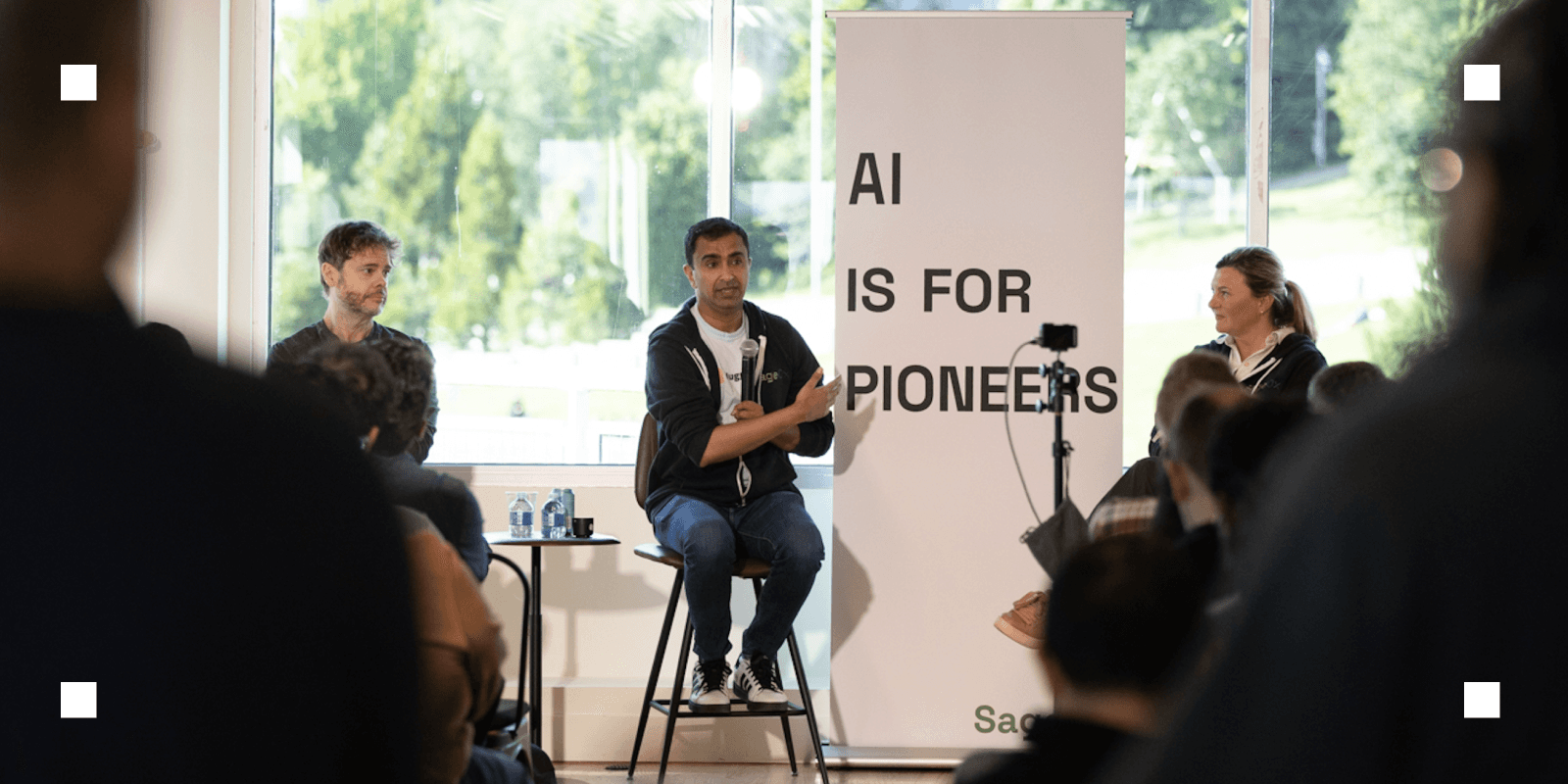
This week at AI House — Seattle's community hub for AI founders and builders — we got a glimpse into the future of software with an incredible panel discussion featuring three Seattle-area tech leaders:
Steve Yegge, a veteran engineer (Amazon, Google) and one of the most provocative and influential thinkers and authors on vibe coding.
Ajit Banerjee, veteran builder (original team at AWS/EBS, Meta, Apple) and entrepreneur (XetHub, acquired by Hugging Face) who is currently founder and CEO of SageOx, a Seattle startup that just announced a $15 million seed round.
Milkana Brace, a longtime product leader, entrepreneur, and co-founder at SageOx, where she is chief product officer.
"What's next is just absolute pandemonium," Yegge said at the AI House event. "The next five years is just going to be an incredible amount of change compared to the previous 20 years — just absolute madness."
Whether you're trying to figure out if your job is safe or you're building a startup from scratch, here is the unfiltered advice they shared on stage at AI House.
Welcome to the "BC" era
Ajit said nothing he did before December 2025 really matters to his intellectual thinking anymore. He literally refers to this as the "BC" (Before Claude) era. We have shifted from simple auto-completions to chatting with models, to single agents, and now to massive swarms of agents murmuring to each other in the background.
Ajit said building software is actually fun again. He described his small team operating in a sublime state of flow, feeling like "kids in a Lego store." Because small teams can now move 40 to 400 times faster to find product-market fit, the focus is entirely on extreme speed and joy, he said.
Which cohort are you in?
Steve noted research from Ezra Savard, the person responsible for training Netflix employees on AI, who identified three distinct cohorts of AI literacy that apply broadly across the industry.
Cohort zero is the non-user — someone who opens a chat window once a month and calls it AI adoption.
Cohort one is the single-agent synchronous user: someone running one agent at a time throughout the workday, burning roughly 4 million tokens a day. Steve called this the absolute baseline — the floor your entire company needs to reach before anything else is possible.
The good news, he said, is that getting someone from zero to one is a solved problem: a four-to-five hour structured session, with their manager present, their actual work in front of them, and no more than six to ten people in the room, and most people cross the threshold.
Cohort two is where things get interesting. This is the person who trusts their agents enough to let them work asynchronously — spinning up multiple agents, reviewing outputs, burning 12 to 15 million tokens a day.
Steve called this "trainer level." Everything above cohort two, he argued, is essentially vanity metrics. The real organizational challenge is getting everyone to cohort two, and then building from there.
Let go of your job title (and taste still matters)
If you're still clinging to the title of "Product Manager" or "Front-End Engineer," it's time to let it go. The panel agreed that world-class builders in this new era operate from first principles, seamlessly blending business, design, and tech.
Because AI has made writing code practically free, the hardest part of the job has completely flipped. Execution isn't the bottleneck anymore; the new bottleneck is the input — figuring out exactly what to build and gathering the right human intent.
Since everyone can build software now, your ultimate differentiator is your taste. We are entering an attention economy where your product has to be packaged beautifully to stand out, which means every developer essentially has to become a marketer.
How to stay defensible (and sane)
The models will keep eating away at basic software. If your product is just a wrapper around some prompts or personas, the next model update will probably put you out of business. To protect yourself, you need to aim ahead of the models. Build complex things that are actually too hard for today's AI to handle perfectly, so by the time the next model drops, you're perfectly positioned to ride the wave.
Steve also recommends keeping a "wedge project" in your back pocket. This should be a difficult coding task that the current models completely fail at. Every time a new model drops, test it against this project. It acts as an anchor to help you physically feel the exponential curve of the AI getting smarter.
Embrace the chaos together
There is no stabilization coming in the next five years. To survive, you need intense "neuroplasticity" to unlearn the old ways of doing things. But paradoxically, the more time we spend locked in with AI agents, the more we desperately need real, face-to-face human connection. Navigating the whiplash of internet hype is exhausting, which is exactly why coming to physical communities like AI House is how you can figure out what's actually working.
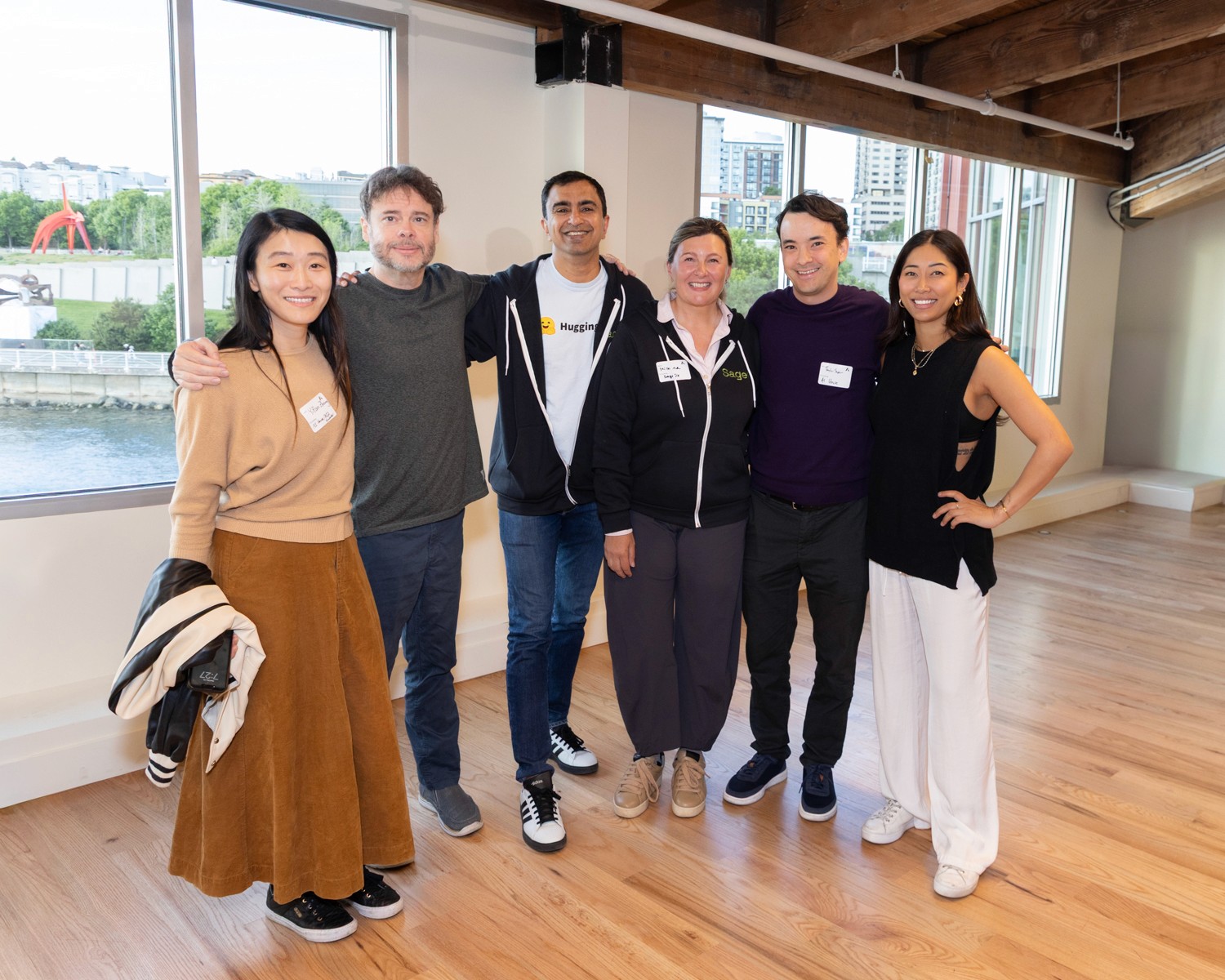
Photo Credit: CB Bell